QA Testing Services for SaaS Startups: How Vervali Works
How Vervali tests a SaaS startup's product: what to test first, when to outsource, manual or automation, the monthly cost at published rates, and how the free pilot runs.
Stay ahead with cutting-edge insights, practical guidance, and innovative strategies designed to drive real results across testing, development, and digital delivery.



No articles match your search
Try a different keyword or choose another category.
How Vervali tests a SaaS startup's product: what to test first, when to outsource, manual or automation, the monthly cost at published rates, and how the free pilot runs.
Vervali offers test automation as a service: framework, suite, CI integration and maintenance on a monthly allocation, from India with a 9am to 1pm Eastern overlap.

Vervali publishes what Shopify and ecommerce testing costs: hourly rates by role, monthly billing for a dedicated tester or retainer, a fixed price for a pre-peak load test, and the tool and in-house costs beside them.
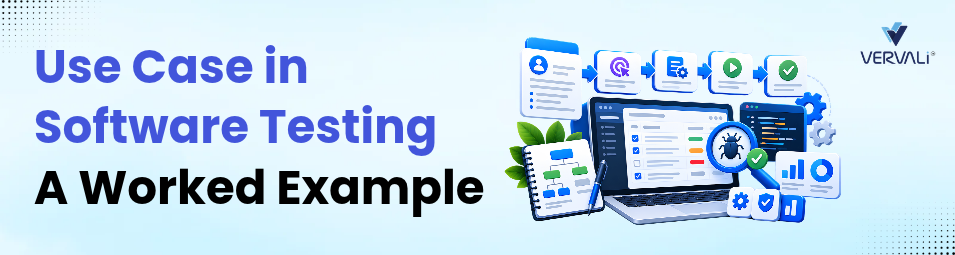
Every path through a use case becomes at least one test case. A worked bank-transfer example shows the test table, and ISTQB's 2023 and 2025 syllabus changes explain where the technique stands.
What a soak test is, how it differs from load, stress and spike tests, how long to run it, the metrics that decide a pass, and how JMeter, k6 and Gatling hold a load steady for hours.
This software testing checklist groups every item by the phase of the test process it belongs to, marks the items teams routinely skip, and shows how to wire the list to the exit criteria that gate a release.
This guide explains what a QA maturity assessment scores you against, what the deliverable looks like on the last day, and when advisory work is the wrong purchase.
This guide explains what mobile app testing services cover, how to size a device matrix from United States traffic data, and what Apple and Google check before a release goes live.

This guide prices the five QA outsourcing engagement models against the cost of an in-house hire, and names the situations where outsourcing is the wrong call.
This article ranks nine software testing companies on their verified review evidence and engagement floors, and sets out the criteria before the ranking.
A ranked comparison of ten IT staff augmentation vendors on verified Clutch data, with the ranking criteria stated before the list. Covers why the highest-rated firms often hold the thinnest evidence, why minimum project size filters a shortlist harder than price, how augmented cost compares with a loaded local hire, and the six contract terms that decide whether an engagement works.
Penetration testing is priced by tester-days multiplied by a day rate, plus reporting and retest. This guide sets out the seven variables that move a quote, how to estimate your own scope before you ask anyone, what compliance actually adds, the four costs hidden in a cheap proposal, and the nine questions that make two quotes comparable.
A dedicated development team is a contract for a named group of engineers who work only on your product, with the vendor carrying employment, replacement and infrastructure while you carry the backlog. This guide compares five sourcing models rather than the usual three, names the six drivers that actually move the cost, and shows how to test a vendor stability claim against the attrition figures TCS and Infosys publish every quarter. It also covers the contract clauses that decide whether a multi-year team relationship survives, and the four situations where the model is the wrong purchase.
Two vendor proposals can both say VAPT, land at the same price, and cover completely different work. This buyer's guide fixes the four scope dimensions that decide what an assessment actually costs, shows how to make three quotes comparable line for line, and lists the red flags specific to vulnerability-assessment-only engagements.
ADA compliance has no single yes or no answer, because three different US regimes name three different WCAG versions. This guide shows which one applies to you, gives a nine-point self-check mapped to exact WCAG success criteria you can run in two hours, and marks the point where automated scanning stops finding problems.
At thousands of concurrent users, the load testing tool is decided by resource shape, not a feature grid. This SaaS-scoped guide ranks k6, Gatling, Locust, and JMeter on concurrency model, multi-tenant noisy-neighbor testing, open-model traffic fidelity, and load-generator cost, using each tool's own documented figures.
API test automation is a business decision that sets a scaling company's release velocity, incident exposure, and diligence readiness, not just a tooling choice. This executive brief translates the evidence into P&L terms: the build-vs-buy-vs-outsource decision, what an outage really costs, and why manual or missing automated testing is flagged in roughly 85% of technical due-diligence audits.
A US buyer shopping for cloud application development thinks the decision is a tech stack. Cloud-native adoption sits at 98% and Kubernetes production use at 82%, so the stack no longer separates vendors. What does is the delivery model, onshore, nearshore, offshore or hybrid, and the compliance posture, IP terms and cost governance that arrive attached to it.
A test plan written for one mobile OS under-tests the other. OWASP MASTG ships separate Android and iOS tests for the same requirement, because storage, network, anti-tampering and the inter-app surface differ by platform. Here is what changes, and why two passes beat one.
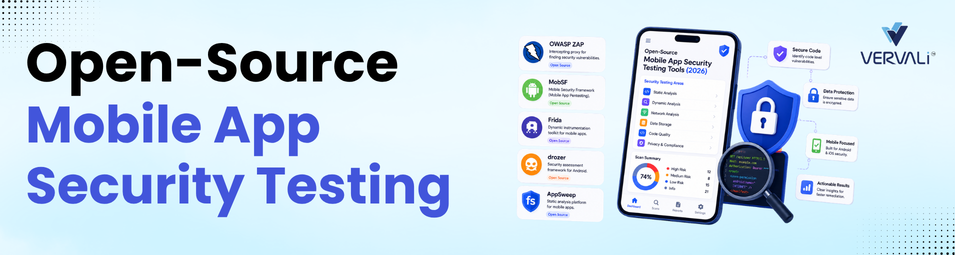
Open-source tools scan a mobile app for security flaws at zero cost, but they cannot tell you which findings are real. A look at MobSF, QARK and the MASTG toolchain, and the triage layer that turns a scan into an assessment.
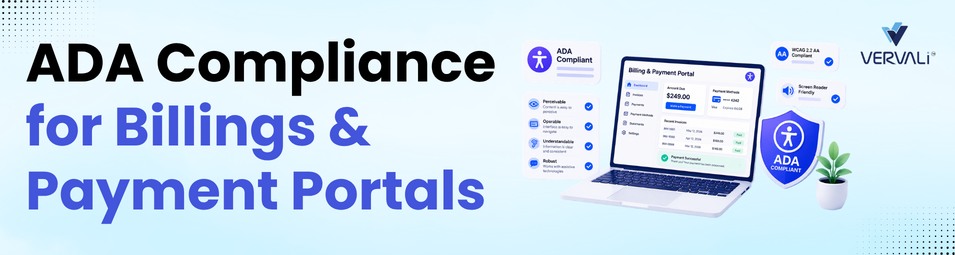
A billing portal carries accessibility obligations the rest of a site does not, because WCAG attaches a higher duty to financial transactions. The criteria that matter on checkout, and how to test them.
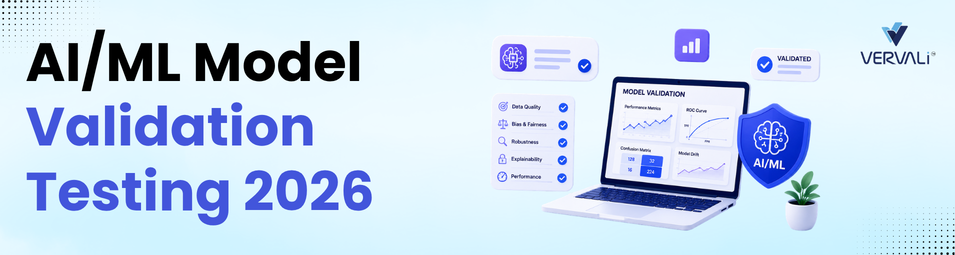
Model validation testing checks whether an AI/ML model generalises, is calibrated, robust, fair, and stable over time, a different job from testing an LLM application. Here is what a validation pass covers.
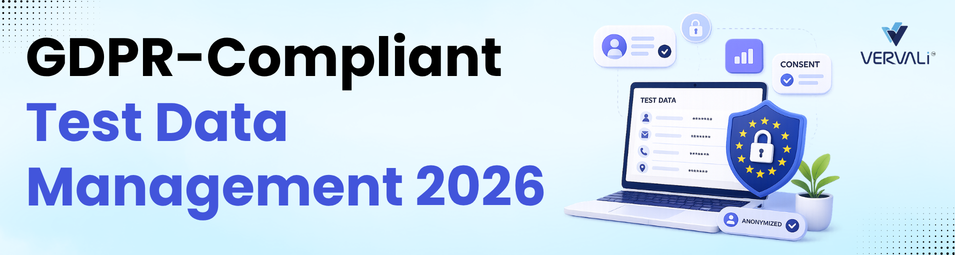
Real customer data in staging is still personal data under GDPR. Here is how QA teams keep test environments compliant: synthetic-first, pseudonymisation, retention, and no live card numbers.
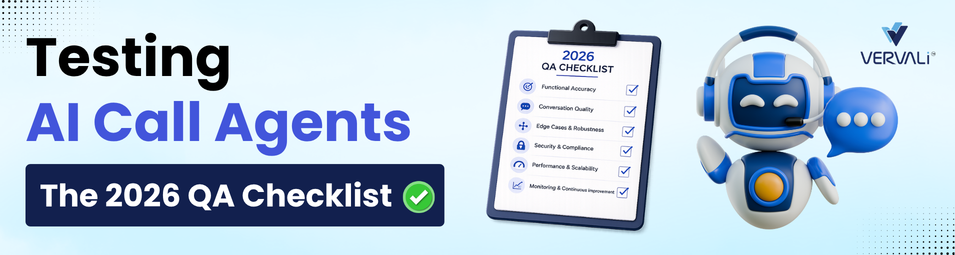
An AI call agent only looks like a chatbot with a voice. Here are the QA dimensions, from Word Error Rate to prompt-injection safety, that decide if it is production-ready.

The current OWASP MASVS is v2.1.0: 8 categories, 24 controls. What changed in the v2 refactor, and how to use it.

SAST reads your code, DAST watches it run. They find different problems. For most mobile teams, run SAST first.

Playwright the framework is free; the money is in CI minutes and managed cloud browsers. Here is the honest cost breakdown.

Hub guide to LLM application testing in 2026: disambiguation, the eval+guardrails+observability stack, the Q2 2026 tool matrix, May 2026 EU AI Act state, red-teaming, and real incident case studies.

India's outsourced software testing market reached USD 2.58 billion in 2024 and is projected to grow to USD 11.1 billion by 2035. This briefing covers market size, growth drivers, the three vendor tiers, GCC and European demand, ROI maths, and the risk register for European buyers.

According to the World Quality Report 2025-26 (Capgemini / OpenText / Sogeti), 89% of organizations are now actively piloting or deploying generative AI in qual...
According to Boston Consulting Group's 2024 Build for the Future study — based on a survey of more than 1,000 C-suite executives across 20 sectors — more than t...

Vervali Pillar 7 hub unifying mobile app testing across four dimensions: functional, performance, security, and AI-assisted testing. A 2026 framework for planning mobile quality, with frameworks, benchmarks, OWASP Mobile Top 10, AI anomaly detection, and pricing models.
WCAG 3.0 — the next major version of the W3C Web Content Accessibility Guidelines — is being drafted right now, and it will redefine how digital products prove...
The custom software development market reached $43.16 billion in 2024 and is projected to grow to $146.18 billion by 2030 at a 22.

Global API downtime increased 60% year-over-year from Q1 2024 to Q1 2025, according to the ITRS Uptrends State of API Reliability 2025 report.

Android malware attacks surged 29% in the first half of 2025, with over 14 million attacks blocked and 255,090 banking trojan packages detected across the full...
QA outsourcing to India costs between $15 and $80 per hour in 2026, depending on role seniority, city, and engagement model.
Financial services recorded 739 data compromises in 2025, more than any other industry for the second consecutive year.
The top QA outsourcing companies in India for 2026 span enterprise players (Infosys, TCS, Wipro, Cognizant, HCLTech), mid-market specialists (Cigniti, QualityKiosk, TestingXperts, Vervali Systems, Qualitest), and boutique firms (DeviQA, A1qa, Testlio, BugRaptors). This guide compares all 14 on Clutch and Gartner ratings, 2026 pricing, ISO certifications, and engagement models.

For most startups, open-source k6 in CI/CD before launch is the right call, with managed platforms only when you need large-scale geo-distributed tests. A funding-stage-aware ladder, open-source-vs-managed economics, and the cheapest credible options.

Appknox is an AI-powered mobile app security testing (MAST) platform with SAST, DAST, and API scanning, CI/CD and Appium integrations, and quote-based pricing. This 2026 review covers its capabilities, pricing tiers, OWASP coverage, and how Appknox compares to Zimperium and alternatives like Appdome and Guardsquare.

Cloud load testing for ecommerce simulates Black Friday and flash-sale traffic on AWS, Azure, or GCP before real shoppers arrive. A 2026 provider-by-provider guide to architecture, pricing, Black Friday strategy, and PCI-DSS-safe payment testing.
Choose k6 for JavaScript/TypeScript teams needing native CI/CD checks, Gatling for polyglot scripting and high VU density, JMeter for the broadest protocol coverage. A 2026 head-to-head with benchmarks, pricing, and migration paths.

According to Mordor Intelligence (2025), 62% of small and mid-sized enterprises suffered revenue-impacting failures due to inadequate performance testing last y...

According to the ThinkSys QA Trends Report 2026, the global outsourced software testing market is projected to grow from USD 39.93 billion in 2026 to USD 101.
More than 5,000 digital accessibility lawsuits were filed in 2025 — a nearly 20% increase year-over-year — and 45-46% of those federal cases targeted companies...
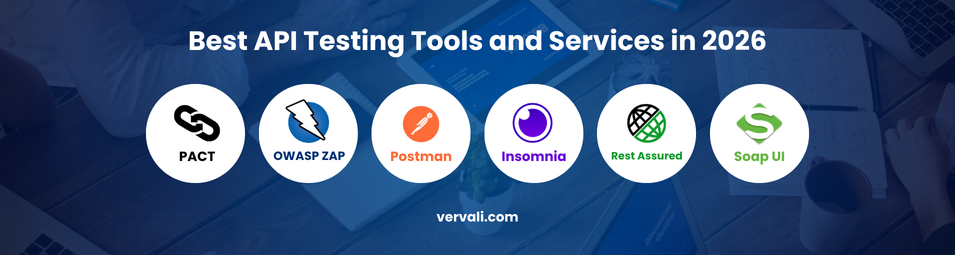
According to Salt Security's Q1 2025 State of API Security Report, 99% of organizations experienced API security issues in the past 12 months, yet according to...
A 2026 guide for QA architects choosing functional testing tools across open-source (Playwright, Selenium, Cypress, Appium), commercial (Tosca, UFT One), AI-powered (Testim, Mabl, Applitools, Katalon, LambdaTest KaneAI), and cloud platforms, with a 6-vendor AI matrix, AI-driven regression coverage, and agentic smoke testing.

Enterprise critical application downtime costs over $300,000 per hour, according to CloudQA's 2025 Bug Cost Report, citing Gartner data.
The automation testing market is projected to grow from $19.97 billion in 2025 to $51.36 billion by 2031 at a 17.05% CAGR, according to GlobeNewswire (2026).
The best load testing tool in 2026 is a match between your team's primary language, the protocols you test, and your budget. We benchmark 13 tools across performance, protocol support, scalability, CI/CD fit, pricing, and current 2026 versions.

According to a 2025 Enterprise Strategy Group survey commissioned by Guardsquare, 93% of organizations believe their mobile app protections are sufficient to pr...

Compare CSPM/CNAPP tools (Wiz, Prisma, Orca), GRC platforms (Vanta, Drata, Secureframe), and AWS/Azure/GCP compliance certifications across PCI-DSS 4.0, HIPAA, GDPR, SOC 2, and UAE ADHICS — plus a finance-vertical cloud-database compliance checklist and continuous-testing framework for DevSecOps teams.

Compare seven end-to-end IoT testing providers for connected devices in 2026 across functional, security, performance, interoperability, and OTA validation — with engagement-scope tiers from pre-MVP prototypes to Series-B production fleets, a 12-protocol coverage matrix, multi-IMSI failover testing, and IoMT business-internet requirements.

Choosing the right automation testing provider is one of the most consequential decisions a QA or engineering leader will make.
Our Expertise


Trusted by 150+ Leading Brands

A Strong Team of 275+ QA and Dev Professionals

Worked across 450+ Successful Projects
 Email Us
 Call Us
From flawless code to flawless quality - we design, develop, and test digital solutions that deliver real results.