QA Testing Services for SaaS Startups: How Vervali Works
How Vervali tests a SaaS startup's product: what to test first, when to outsource, manual or automation, the monthly cost at published rates, and how the free pilot…
Vervali tests insurance platforms where a mistake is visible to a regulator: policy administration, quoting and rating, claims and settlement, underwriting workflows, agent and broker portals, and the integrations to legacy core systems. Coverage includes regression across rate changes, security and data protection testing, and the evidence a compliance review will ask for.

ISO/IEC 17025:2017Accredited testing laboratory

CMMI Maturity Level 3The process is written down and repeats

ISO 9001:2015Quality management

ISO/IEC 27001Information security
Testing first on this page, development second. A policy administration or claims platform touches money, regulation and a legacy core all at once, and a bad release is visible to a regulator. US product and risk teams get this work in US hours, 9am to 1pm Eastern, with delivery from India, from an ISO/IEC 17025 accredited lab with CMMI Level 3 process, under ISO/IEC 27001. Functional method sits on application testing. Here it is those paths on quoting, claims, policy admin and the broker portal.
Endorsements, mid-term adjustments and renewals, where the arithmetic is dense and rarely fully tested. A premium that was correct yesterday and wrong after a product tweak is the case a customer sees. We test the change, not only the new business path that already passed last quarter.
The engine, and whether a rate change does what the actuary intended. An insurance quote that silently defaults is worse than one that fails. Expected values come from the table you named. A free test of one quoting flow is the first look at whether that table still matches the screen.
The path with the money and the regulator on it. A claim that looks paid and a ledger that does not agree is not a Jira ticket. We test capture, reserve, payment, reverse and the audit trail on the decision, not only the happy FNOL screen.
Referral rules, authority limits and the case that should never auto-bind. A rule that silently approved overnight without a spec is the case that fails an audit. We reconstruct the intended rule with your underwriting owner when there is no spec, then test the referral that should have fired.
Commission, quote-to-bind, and the screens a broker actually uses under a campaign. A web pass on the customer portal does not prove the broker path. Device coverage sits on mobile application testing when the app is in. On this page it is those insurance journeys.
You need quoting, claims, policy admin or broker coverage that matches how an insurance release actually fails. A free test of one quoting flow is the first look. Talk to a QA lead if the platform is already written down.
Need quoting, claims and policy admin coverage that matches how a regulated release actually fails? Talk to a QA lead.
Talk to a QA LeadEvery rate table change, product launch and regulatory update risks breaking the pricing that was correct yesterday. That is the recurring cost in this sector, and it is why a rating regression pack is run before every rate release, not only every software release. We describe the method here. We will not claim a named insurer engagement we cannot evidence.
A pack holds the quotes that should still come back after a table change: new business, mid-term, renewal, and the case that should decline. Expected values are generated from the table you named, with your pricing owner, not from a round number we invent. If the table and the screen disagree, that is the fail.
A pack that is not updated when a product launches is a pack that will pass a broken rate. Ownership sits with the same testers who run it. We will not pretend a one-off spreadsheet is a regression pack. The quote names how the pack is kept current, and who signs the expected values.
Software releases and rate releases are different calendars. A rating pack that only runs on the sprint cadence misses the night a table went live. Automation of that pack sits on test automation. This page is the insurance argument for running it on the rate calendar.
Core system, payment, document generation, third-party data such as credit, vehicle or medical, identity, and reinsurance where relevant. For each, what is tested is the behaviour when the provider is slow or returns something unexpected. An insurance quote that silently defaults is worse than one that fails. The quote names the core. We will not invent a PAS catalogue.
Bind, endorsement and claim updates that have to land on a system that was not built for this portal. Timing windows, duplicate posting, and the case the core rejects after the portal already showed success. API method sits on API testing services. This page is those insurance contracts.
Premium collection, refund, and the document that has to match the quote the customer accepted. PCI sits in when card data moves. We test those controls. We do not issue a PCI certificate. A PDF that no longer matches the screen is the case a broker forwards to the regulator.
Credit, vehicle or medical feeds, and identity, failing slowly rather than cleanly. A timeout that looks like a pass on a script and a stalled quote in production is the usual miss. Reinsurance sits in when the treaty is in the path. We test the slow vendor, the partial payload, and the default that should never bind.
What a regulator or an internal audit will ask for, and what testing produces towards it: control evidence, data protection, retention, and the audit trail on a claim decision. We test the controls you named against the rules you named. HIPAA sits in when health data is in the path. PCI sits in when card data moves. We do not issue a NAIC, HIPAA or PCI certificate. Control-by-control method sits on compliance testing.
Vervali tests client controls and evidence for SOC 2 readiness and does not hold or issue that certification. ISO/IEC 27001 is held by Vervali. We do not claim IAAP, and we do not claim certified security staff. Application and API attack work is a separate engagement of agreed in-scope assets on security testing, with 100% coverage of agreed in-scope. A scanner dump with no owner is not the engagement.
Two short blocks. Load at renewal cycles and campaign peaks, and automation of the rating regression pack. Both link to the pages that carry the method rather than repeating it. We will not invent a concurrent-user number we cannot evidence.
Renewal windows, a campaign, and the night a rate table went live all produce different shapes, and the one that breaks the platform is rarely the biggest. The profile is modelled from your own history. Method sits on performance testing. Talk to a QA lead if a peak is already named.
Scripts that run before every rate release, with a person who owns a fail. Method sits on test automation. This page is those insurance paths, gated in CI when that is in the quote. A generator is not a test suite. Talk to a QA lead if the pack is already named.
This page carries no insurance case study. It says what it tests rather than who it has tested for. We will not borrow the fintech cases. A claims platform is not a lending platform. We will not invent a quote-to-policy percentage, an uptime band, or a named testimonial as proof of an insurance engagement we cannot evidence here.
What we will do is test policy administration, quoting and rating, claims, underwriting, agent portals and the integrations to the core you named. Adjacent financial work, when you need that sector, sits on fintech and banking. Talk to a QA lead if the platform is already written down. A free test of one quoting flow is the first look.
To scope an insurance platform we need the products in play (quoting, claims, policy admin, broker), the rate-change calendar, and staging access under NDA. Data access is agreed before anything is signed. We will not copy production customer or claims records into a test environment. A first assessment is quoted after that look. You receive the coverage model, the integrations in scope, and whether a rating regression pack sits in the same week.
A free test of one quoting flow is the fastest first look. Talk to a QA lead if you already know the platform. Development sits second on this page and on custom software development when the question is the build, not the pack. Coverage is 9am to 1pm Eastern. We do not claim 24/7.
The same company can build the portal, the rating surface and the integrations behind them. Testing is first on this page because the searches that reach it are testing searches. ERP and CRM as a suite sits on ERP and CRM development. We do not sell both as two invoices for the same week unless you asked for both. Talk to a QA lead if the question is the pack. Book a scoping call if the question is the build.

OUR BLOGS

How Vervali tests a SaaS startup's product: what to test first, when to outsource, manual or automation, the monthly cost at published rates, and how the free pilot…

Vervali offers test automation as a service: framework, suite, CI integration and maintenance on a monthly allocation, from India with a 9am to 1pm Eastern overlap.

Vervali publishes what Shopify and ecommerce testing costs: hourly rates by role, monthly billing for a dedicated tester or retainer, a fixed price for a pre-peak lo…
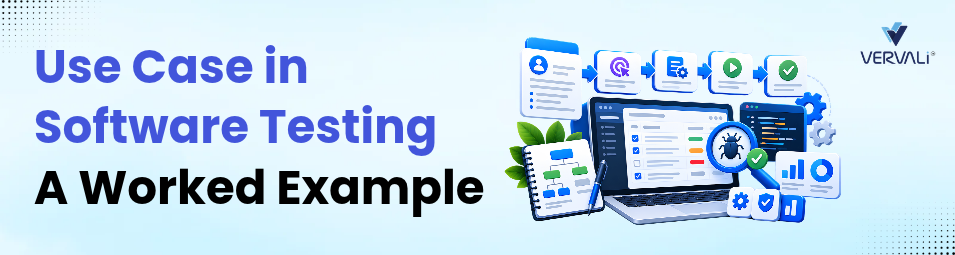
Every path through a use case becomes at least one test case. A worked bank-transfer example shows the test table, and ISTQB's 2023 and 2025 syllabus changes explain…
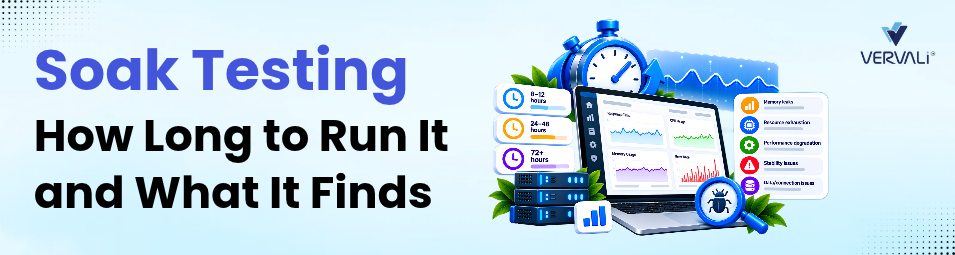
What a soak test is, how it differs from load, stress and spike tests, how long to run it, the metrics that decide a pass, and how JMeter, k6 and Gatling hold a load…
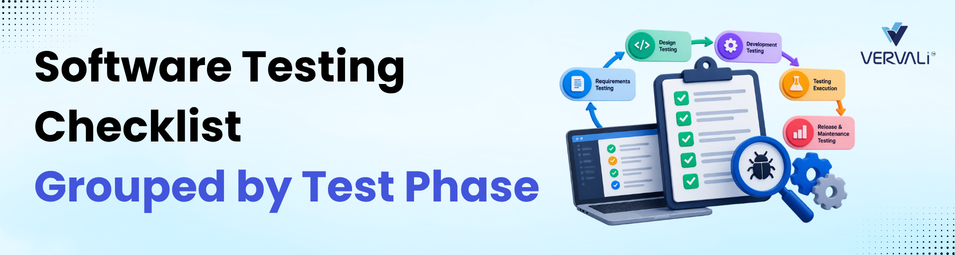
This software testing checklist groups every item by the phase of the test process it belongs to, marks the items teams routinely skip, and shows how to wire the lis…
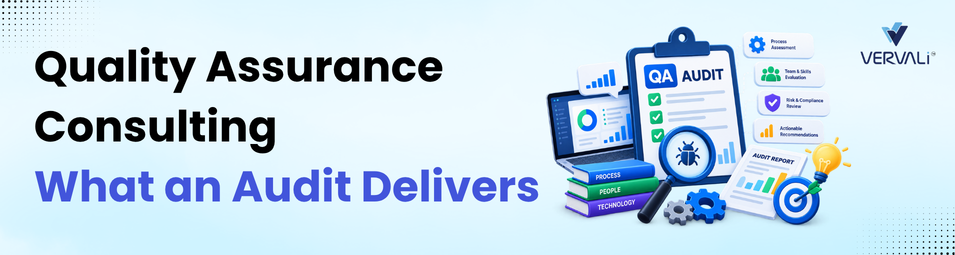
This guide explains what a QA maturity assessment scores you against, what the deliverable looks like on the last day, and when advisory work is the wrong purchase.
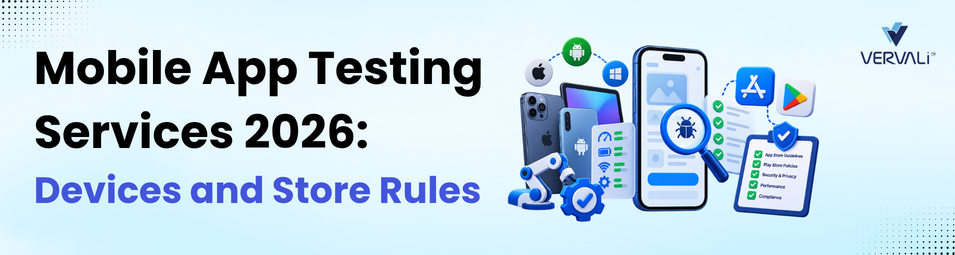
This guide explains what mobile app testing services cover, how to size a device matrix from United States traffic data, and what Apple and Google check before a rel…

Our Expertise


Trusted by 150+ Leading Brands

A Strong Team of 275+ QA and Dev Professionals

Worked across 450+ Successful Projects
 Email Us
 Call Us
From flawless code to flawless quality - we design, develop, and test digital solutions that deliver real results.