QA Testing Services for SaaS Startups: How Vervali Works
How Vervali tests a SaaS startup's product: what to test first, when to outsource, manual or automation, the monthly cost at published rates, and how the free pilot…
Vervali tests REST, GraphQL and gRPC APIs and the services behind them: functional and error-path coverage, contract and schema compatibility between provider and consumer, authentication and authorisation, rate limiting, integration with downstream systems, security testing and load testing. Suites run inside your pipeline, in Postman, REST Assured or k6, and report in a form your developers can act on.


ISO/IEC 17025:2017Accredited testing laboratory

CMMI Maturity Level 3The process is written down and repeats

ISO 9001:2015Quality management

ISO/IEC 27001Information security
This page is the API testing engagement: REST, GraphQL and gRPC, functional and error paths, contract and schema, authentication and authorisation, rate limits, security and load. US product teams get this work in US hours, 9am to 1pm Eastern, with delivery from India, from an ISO/IEC 17025 accredited lab with CMMI Level 3 process. Suites run in Postman, REST Assured or k6, inside GitHub Actions, Jenkins or Azure DevOps. A free API audit of one service is the first look.
The documented behaviour: methods, status codes, payloads and the data the caller actually needs. A 200 with the wrong object is a fail. Happy-path collections are not the engagement. Error paths sit next to the success case, because that is where integrations break.
Whether provider and consumer still agree after a change. A field removed, a type widened, a null that used to be required. Consumer tests against a mock still pass, and production is where it fails. That is the organisational problem this pack is for.
Tokens, roles and object-level access, which is the finding most often missed and most often exploited. A second user who can still read another account is the case. Security tooling sits on API security testing. This page still names it, because a functional pass is not an auth pass.
What the caller gets when something upstream fails: timeouts, 4xx, 5xx, partial payloads. Integrations break here, not on the documented 200. We write the expected body with your API owner before execution, because a blank 500 is not a contract.
Behaviour at the quota boundary, not below it. Security against the OWASP API Top 10 on agreed in-scope endpoints, with 100% coverage of that set. Load in k6 from the shape you actually get. We do not claim certified security staff.
You need functional, contract, auth, error, rate-limit, security and load coverage on the APIs you named, running in the pipeline. A free API audit of one service is the first look. Book a call if the catalogue of endpoints is already written down.
Need contract, auth and error-path coverage, not another happy-path collection? Book a call, or start with a free API audit of one service.
Book a CallA provider ships a change, the consumer build still passes because it tests against a mock, and the failure appears in production. Contract testing catches that before merge: the provider verifies it still meets the contract the consumer published, and the consumer verifies it still talks to the contract the provider publishes. The contract lives in version control, next to the service, with an owner on each side.
It only works if both teams agree to fail the build when the contract breaks. That is why most attempts fail: one side still treats the mock as the source of truth. We will say so in the readiness review rather than sell a suite that will not pay back. Schema checks without an owner are not a contract. Stay here when both sides will take the red build.
This page is the engagement: functional, contract, auth, error, rate limits, security and load, in the pipeline. Functional API testing is one layer of that work. API test automation is how the suite keeps running. API security testing is the OWASP API Top 10 slice. Builds sit on API development. We do not sell those URLs as two invoices for the same week unless you asked for both.
You need the full API pack, including contract testing and what happens to the consumer when the provider changes. A free API audit of one service is the first look. Book a call if the endpoint list is already written down.
You already have cases and need them running after every commit. API test automation is that page. Framework, flake budget and what not to automate sit on test automation services.
Named, because this reader scans for them. Postman for exploration and collections, REST Assured for suites in a Java stack, k6 for load, plus schema validation on the contract. Then where it runs: GitHub Actions, Jenkins or Azure DevOps when those are the pipelines you already have. Pull requests get the fast contract and smoke set. Nightly gets the wider functional and load pack. A laptop-only run is not the engagement.
Collections for exploration and a first audit. REST Assured when the suite has to live in a Java build. We will not invent Katalon, Robot or SoapUI as the default. Named extras sit in the quote.
Throughput, latency and error rate at the shape you named, against staging. Method sits on performance testing when the question is the platform. This page is the API slice of that load.
GitHub Actions, Jenkins or Azure DevOps. What runs on a pull request is not what runs nightly. Reports land in a form developers can act on. A dashboard name such as Allure sits in the quote when you asked for it.
When the service under test depends on six others, half of them owned by other teams, the choices are mocking, a shared environment, or contract testing, and each has a cost. Mocking is fast and lies when the other team changed the payload. A shared environment is honest and flaky. Contract testing is the one that fails the right build, and it needs both owners.
We recommend contracts when two teams will take a red build; mocks for early development of a service that does not exist yet; a shared environment only for the last integration pass, with test data that does not collide. Test data strategy sits next to that choice: masking and synthetic records so you are not copying production. Method for that pack sits on test data management and compliance.
The API layer of ERP, payment and identity work delivered in enterprise and fintech engagements, described by sector. These were not standalone API-only jobs. They show Vervali has tested the integrations that actually move money and records.
India · two leading private-sector banks
Loan processing and onboarding depended on the integrations behind the screens. After the pack ran: 60% faster loan processing, 50% less agent onboarding time, and 100% compliance on the controls named in that work. API coverage was part of that estate, not a separate product name.
60% faster loan processing50% less agent onboarding timeIndia · manufacturer · sales-operations platform
40% less manual stock reconciliation when the old record and the new process finally agree. That is an integration and data problem as much as a screen problem. Contract and schema checks are how you see the break before cutover.
40% less manual stock reconciliationUAE · SME finance platform
Automation on repeatable finance journeys, including the APIs those journeys call. After: 40% less testing time, and 98% user satisfaction. Identity and payment integrations were in that estate. They stay unnamed.
40% less testing time98% user satisfactionPrice follows the number of endpoints and the number of roles. What else moves it: whether contract testing is in scope, whether load is included, and whether the suite is handed over or maintained. Clutch lists Vervali at $25 to $49 per hour. We do not invent a project total. A free API audit of one service is how we see the surface before anyone writes a quote.
Book a call once the endpoint list is written down. We will not invent a typical-engagements-start-at band we cannot evidence. Coverage is 9am to 1pm Eastern. We do not claim 24/7.

OUR BLOGS

How Vervali tests a SaaS startup's product: what to test first, when to outsource, manual or automation, the monthly cost at published rates, and how the free pilot…
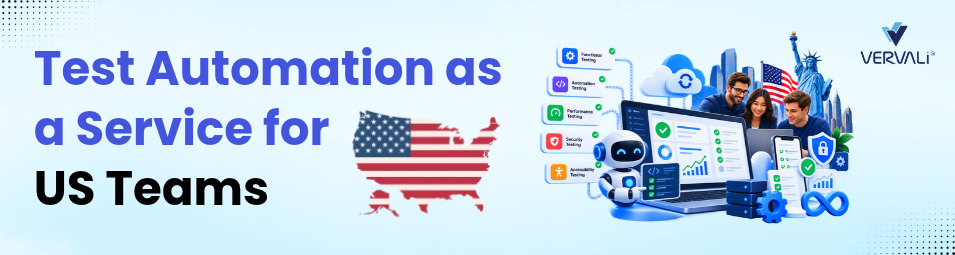
Vervali offers test automation as a service: framework, suite, CI integration and maintenance on a monthly allocation, from India with a 9am to 1pm Eastern overlap.

Vervali publishes what Shopify and ecommerce testing costs: hourly rates by role, monthly billing for a dedicated tester or retainer, a fixed price for a pre-peak lo…
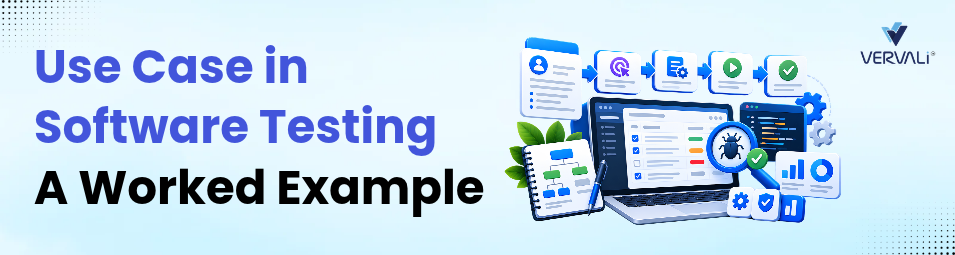
Every path through a use case becomes at least one test case. A worked bank-transfer example shows the test table, and ISTQB's 2023 and 2025 syllabus changes explain…
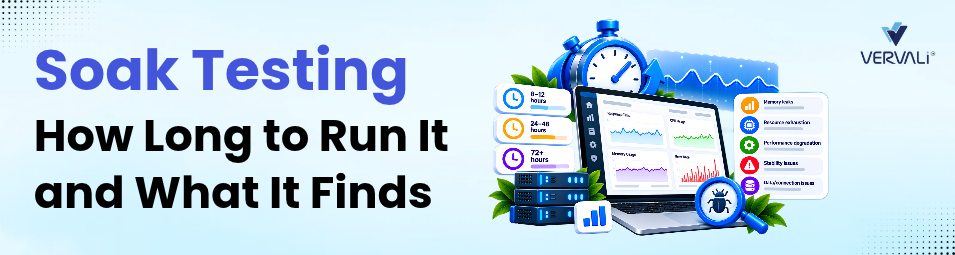
What a soak test is, how it differs from load, stress and spike tests, how long to run it, the metrics that decide a pass, and how JMeter, k6 and Gatling hold a load…
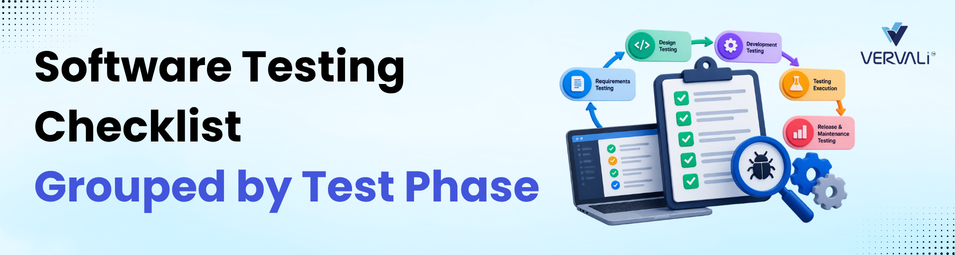
This software testing checklist groups every item by the phase of the test process it belongs to, marks the items teams routinely skip, and shows how to wire the lis…
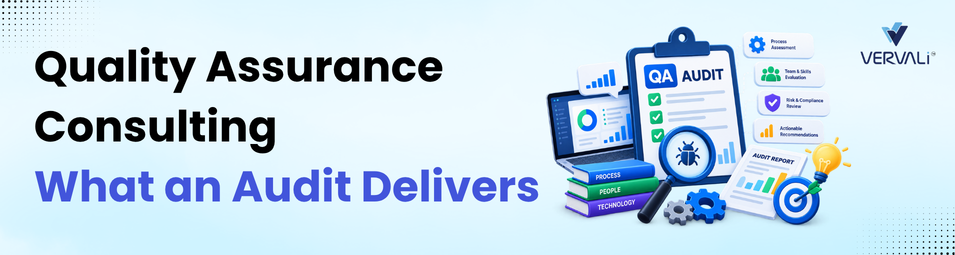
This guide explains what a QA maturity assessment scores you against, what the deliverable looks like on the last day, and when advisory work is the wrong purchase.
This guide explains what mobile app testing services cover, how to size a device matrix from United States traffic data, and what Apple and Google check before a rel…

Our Expertise


Trusted by 150+ Leading Brands

A Strong Team of 275+ QA and Dev Professionals

Worked across 450+ Successful Projects
 Email Us
 Call Us
From flawless code to flawless quality - we design, develop, and test digital solutions that deliver real results.