QA Testing Services for SaaS Startups: How Vervali Works
How Vervali tests a SaaS startup's product: what to test first, when to outsource, manual or automation, the monthly cost at published rates, and how the free pilot…
Vervali runs software load and performance testing: load, stress, soak, spike and scalability tests against web, mobile, API and cloud systems, using JMeter, k6 and Gatling with cloud load generation. Every engagement ends with the breaking point, the bottleneck that caused it, and what to change, written so a product owner can act on it without a performance engineer to translate.


ISO/IEC 17025:2017Accredited testing laboratory

CMMI Maturity Level 3The process is written down and repeats

ISO 9001:2015Quality management

ISO/IEC 27001Information security
This page is software load and performance testing: load, stress, soak, spike, scalability and endurance against web, mobile, API and cloud systems. It is software testing, not a laboratory that tests cranes or lifting gear. US product teams get this work in US hours, 9am to 1pm Eastern, with delivery from India, from an ISO/IEC 17025 accredited lab with CMMI Level 3 process. Tools are JMeter, k6 and Gatling, with cloud load generation. A free 1-hour load test on a staging URL is the first look.
The traffic you expect: a sale, a campaign, a month end. The question is whether the product still meets the times you named at that shape. A flat script at a fixed rate is not this test. Cloud estate load sits on cloud performance and scalability testing.
Past the expected peak until it fails, so you see the breaking point and how it recovers. Dedicated stress work sits on stress testing when that is the only buy. This page still names it, because a load pass is not a stress pass.
Hours under load, not minutes. Memory leaks and connection exhaustion are what actually take platforms down, and almost no vendor page covers them. Soak is the run that finds those. Endurance is the same idea on a longer window. A 20-minute spike is not soak.
A sudden surge, not a ramp. A campaign that lands, a sale that opens, a feed that refreshes. The failure is usually a queue or a connection pool, not the home page. We write the shape from your own analytics before execution.
Whether it grows with demand, scales in when the spike is over, and what that costs. Dedicated scale work sits on scalability testing. This page still names it. We will not invent a concurrent-user number we cannot evidence.
You need the breaking point, the bottleneck that caused it, and what to change, written so a product owner can act without a translator. A free 1-hour load test on a staging URL is the first look. Book a call if the peak is already written down.
Need the breaking point in plain English, not another virtual-user graph? Book a call, or start with a free 1-hour load test.
Book a CallA flat script at a fixed rate tells you almost nothing. Real traffic has a mix of journeys, think time, a ramp, cached and uncached users, and a long tail of slow clients. The profile is built from your own analytics: which journeys actually run, how they are weighted, and where people wait. The peak that matters is usually a concurrency peak rather than a request-rate peak.
A major airline booking and check-in platform reached 40% faster page loads when the bottleneck was a real one, not a synthetic one. Banking load is salary day, month end and a campaign, not a round number of virtual users. Property platforms break on a feed refresh before they break on visitors. Stay here when the question is that model. A free 1-hour load test on a staging URL is the first look at the surface.
A client who has already run their own load test often has numbers and no answer. Four layers, isolated on purpose. Without instrumentation on your side, a load test produces a graph and no cause. That is the difference between a testing service and a tool.
Code paths and thread behaviour under the mix you named. A 200 that took four seconds is a fail. API load sits next to the screen when the caller is the bottleneck. Method for that slice sits on API testing services.
Query plans, lock contention and the connection pool that looked fine on a quiet Tuesday. The report names the query, not a slide of CPU. Tuning after the finding sits in the quote when you asked for it.
Limits, latency and the region the load is generated from. A US buyer whose users are not in India needs generation that matches those users. Cloud generation is how that happens. We will not pretend a laptop run is that test.
Autoscaling lag, idle capacity and the instance that is already hot. Cloud estate behaviour sits on cloud performance and scalability testing. Stay here when the question is the application under that traffic. We do not sell both as two invoices for the same week unless you asked for both.
The breaking point, in your own units: concurrent users or orders per minute, not virtual users. The bottleneck, named. The evidence. What to change and the expected effect. What was not tested. A report only a performance engineer can read is a report that changes nothing, which is the standard complaint about this service.
We write it so a product owner can act. Pass and fail is not a report. Book a call if you already have a graph and no cause. A free 1-hour load test on a staging URL is the first look at the surface we would put in that pack.
Slow code on autoscaling infrastructure does not always fall over. It bills. A performance engagement can pay for itself out of the cloud invoice rather than out of the outage that did not happen. What is measured: idle capacity, a scale-out that never scaled in, and the instance that is already hot on a quiet Tuesday.
We will not invent a savings percentage we cannot evidence on your estate. AWS and Azure are the platforms Vervali builds on. Cloud estate behaviour sits on cloud performance and scalability testing. Stay here when the question is the application under that traffic. A free 1-hour load test is the first look.
A sale, a campaign, a product launch, a school term, a salary day. A known peak is planned weeks out, because the fixes take longer than the test. Retail calendars sit on ecommerce testing. Banking month end sits on fintech and banking.
A compressed two-week version can find the breaking point. It cannot cover the soak that finds a leak. We will say so in the scoping call rather than sell a suite that will not pay back. Book a call if the date is already named. A free 1-hour load test on a staging URL is the first look.
Three delivery engagements, sector and country. They show Vervali has tested systems at that scale. They are not a claim those were performance-only jobs.
India · major airline · booking and check-in
A major airline booking and check-in platform. After the pack ran: 85% test coverage, 70% fewer customer-reported issues, and 40% faster page loads. The 40% came from a real bottleneck, not a synthetic one.
40% faster page loads70% fewer customer-reported issuesAustralia · cybersecurity SaaS · DDoS simulation
A cybersecurity SaaS product under high-intensity DDoS simulation. After: 99.9% platform stability on that run, and 60% faster vulnerability validation. Cloud performance includes how it fails, not only how green the dashboard looks on a quiet Tuesday.
99.9% platform stability60% faster vulnerability validationIndia · Mumbai supplements retailer
Peak-load work on a retail storefront. After: 40% faster pages and 50% more mobile conversions. The peak that mattered was concurrency at checkout, not a round number of virtual users on the home page.
40% faster pages50% more mobile conversionsJMeter, k6 and Gatling, with what each suits. The choice matters less than the traffic model. Cloud load generation is where the traffic is run from, which matters for a US buyer whose users are not in India. Commercial extras sit in the quote when you named them. A laptop-only run is not the engagement.
JMeter for mixed protocol packs. k6 when the suite has to live next to the pipeline. Gatling when the scenario is code. We will not invent LoadRunner or NeoLoad as the default. Named extras sit in the quote.
Traffic generated to match where your users actually sit, not only from the delivery office. A US buyer should ask where load is generated from. The quote names the regions after we see the analytics.
A smoke set can run on a pull request. Soak and the wider peak pack run on a named window against staging. Reports land in a form a product owner can act on. A dashboard name sits in the quote when you asked for it.
Clutch lists Vervali at $25 to $49 per hour. We do not invent a project total. Price follows the surface, the peak you named, whether soak is in, and whether cloud generation is in more than one region. A free 1-hour load test on a staging URL is how we see the surface before anyone writes a quote.
Book a call once the peak is written down. We will not invent a typical-engagements-start-at band we cannot evidence. Coverage is 9am to 1pm Eastern. We do not claim 24/7.

OUR BLOGS

How Vervali tests a SaaS startup's product: what to test first, when to outsource, manual or automation, the monthly cost at published rates, and how the free pilot…

Vervali offers test automation as a service: framework, suite, CI integration and maintenance on a monthly allocation, from India with a 9am to 1pm Eastern overlap.

Vervali publishes what Shopify and ecommerce testing costs: hourly rates by role, monthly billing for a dedicated tester or retainer, a fixed price for a pre-peak lo…
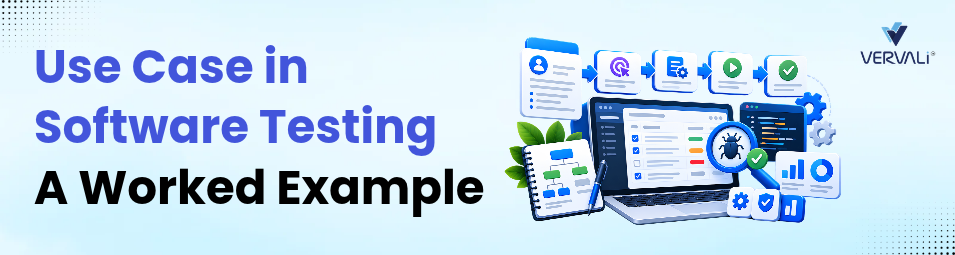
Every path through a use case becomes at least one test case. A worked bank-transfer example shows the test table, and ISTQB's 2023 and 2025 syllabus changes explain…
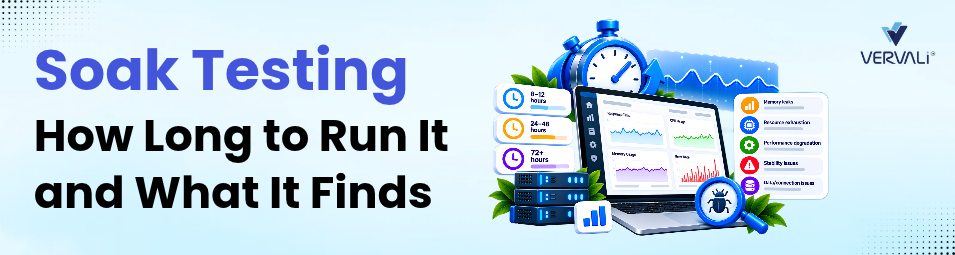
What a soak test is, how it differs from load, stress and spike tests, how long to run it, the metrics that decide a pass, and how JMeter, k6 and Gatling hold a load…
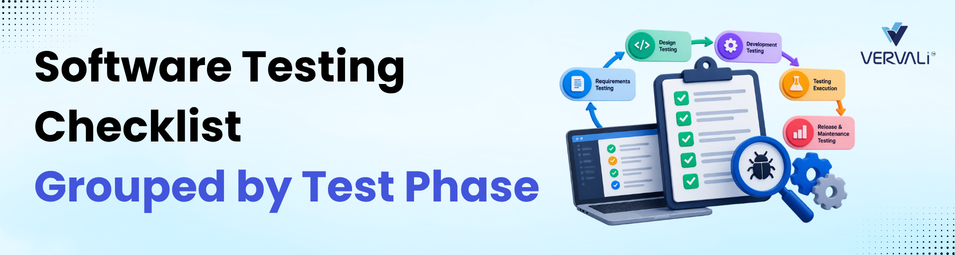
This software testing checklist groups every item by the phase of the test process it belongs to, marks the items teams routinely skip, and shows how to wire the lis…
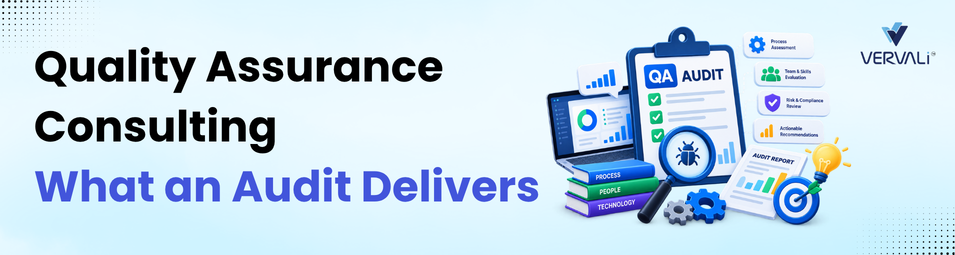
This guide explains what a QA maturity assessment scores you against, what the deliverable looks like on the last day, and when advisory work is the wrong purchase.
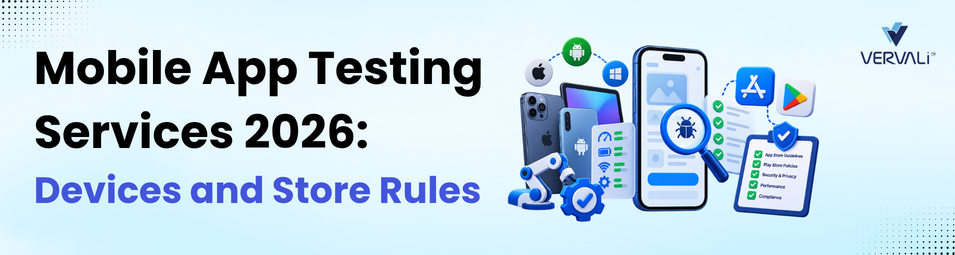
This guide explains what mobile app testing services cover, how to size a device matrix from United States traffic data, and what Apple and Google check before a rel…

Our Expertise


Trusted by 150+ Leading Brands

A Strong Team of 275+ QA and Dev Professionals

Worked across 450+ Successful Projects
 Email Us
 Call Us
From flawless code to flawless quality - we design, develop, and test digital solutions that deliver real results.