QA Testing Services for SaaS Startups: How Vervali Works
How Vervali tests a SaaS startup's product: what to test first, when to outsource, manual or automation, the monthly cost at published rates, and how the free pilot…
Vervali rehearses your disaster recovery plan and measures it. We run planned and unannounced failover, restore from backup, test the runbook with the people who would actually be on the call, and time every step against the recovery time and recovery point objectives you have committed to. You receive an audit-ready record of what happened, what met the target and what did not.

ISO/IEC 17025:2017Accredited testing laboratory

CMMI Maturity Level 3The process is written down and repeats

ISO 9001:2015Quality management

ISO/IEC 27001Information security
A rehearsal of the recovery plan you already have, timed against the RTO and RPO you committed to.
The team talks it through and finds the missing phone number. Lowest disruption, lowest confidence. Right when the plan has never left the document.
Components are failed in a controlled way. The finding is usually a dependency nobody wrote down, such as cloud identity that does not fail over with the app.
Recovery runs alongside production without cutting over. You see whether the restore works without betting the live service, but failback is not in it.
The real thing, including coming back. Highest disruption, highest confidence. The quote names the window.
Proving the backups restore. A backup job that went green is not a restore. Implementation is on disaster recovery and backup.
Planned and unannounced failover both sit in the quote. An unannounced test is a named line, not the default, and internal IT agrees to it first.
Need the failover timed against the RTO you committed to, not another plan on paper?
Book a DR TestRecovery time and recovery point objectives are commitments to a board, an auditor or a customer contract, and almost nobody measures them.
We time each step of the recovery from the call to the service answering.
We measure the actual data loss against the number you committed to.
The report is the comparison between committed and achieved, not a pass mark. A restore that came back late with yesterday's data fails both.
What differs is where the recovery actually fails. AWS and Azure are the platforms Vervali builds on.
Region failover, the services that do not fail over with you, and the identity dependency that stops recovery before it starts. Configuration evidence is on cloud security and compliance.
Hardware, tape and physical access. A restore that needs a person in the room is a finding, not a footnote.
The dependencies that cross the boundary, which is where hybrid recoveries fail. The quote names both sides.
A recovery plan is executed by people at three in the morning, often not the people who wrote it.
Whether someone who did not write it can follow it, step by step.
Whether the contact list is current and the credentials in the vault still work.
Whether anyone knows who makes the call. Internal IT and DevOps stay in the room, and we do not run a drill they did not agree to.
Already know who is on the call? A QA lead can scope the rehearsal.
Book a DR TestWhat you can hand to an auditor, a board or an insurer, written as evidence rather than a slide.
The scenario and the timeline with timestamps.
What met the objective, what did not, and the gaps.
Each fix has an owner. On a banking engagement, audit preparation went from 5 days to 5 hours once a dated pack existed.
We test those recoveries and produce the evidence. We do not issue a certificate. Control-by-control software evidence is on compliance testing.
Annually is the usual answer and it is not enough.
A major architecture change, a cloud migration or a new critical dependency.
An acquisition, a failed audit, or a change in the recovery objectives themselves.
Critical systems get a rehearsal after those changes, not only on a calendar. The quote names the cadence.
Recovery work that sat inside larger engagements, sector and country. These were not standalone disaster-recovery tests.
Australia · cybersecurity SaaS · DDoS simulation
A cybersecurity SaaS product under high-intensity DDoS simulation. After: 99.9% platform stability on that run. How it fails, and what it costs to absorb that failure, is the recovery question.
99.9% platform stabilityBanking · audit preparation
Before: audit preparation took five days of assembling screenshots. After: a dated evidence pack, from 5 days to 5 hours. The same pack shape is what a recovery rehearsal has to leave behind.
5 days to 5 hoursIndia · Chennai diagnostics chain · back end
The back end of a diagnostics chain: the integrations and the load patient volume actually produces. A recovery plan that ignores that estate is a slide.
From a plan on paper to a rehearsal you can show an auditor.
Share the Plan
Tell us the recovery plan, the RTO and RPO you committed to, and the people who would be on the call.

Choose the Level
We agree which of the five test levels fits, from tabletop to full failover and failback, and the window.

Start With a Plan Review
A free review of your current recovery plan is the first look. Most engagements land at $25 to $49 an hour blended, and price follows the level you choose.

Get the Audit Record
The timeline, what met the target, the gaps and remediation with owners, 9am to 1pm Eastern with delivery from India.


OUR BLOGS

How Vervali tests a SaaS startup's product: what to test first, when to outsource, manual or automation, the monthly cost at published rates, and how the free pilot…

Vervali offers test automation as a service: framework, suite, CI integration and maintenance on a monthly allocation, from India with a 9am to 1pm Eastern overlap.

Vervali publishes what Shopify and ecommerce testing costs: hourly rates by role, monthly billing for a dedicated tester or retainer, a fixed price for a pre-peak lo…
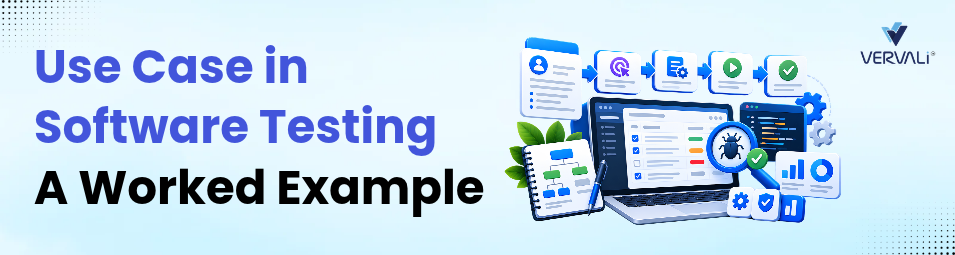
Every path through a use case becomes at least one test case. A worked bank-transfer example shows the test table, and ISTQB's 2023 and 2025 syllabus changes explain…
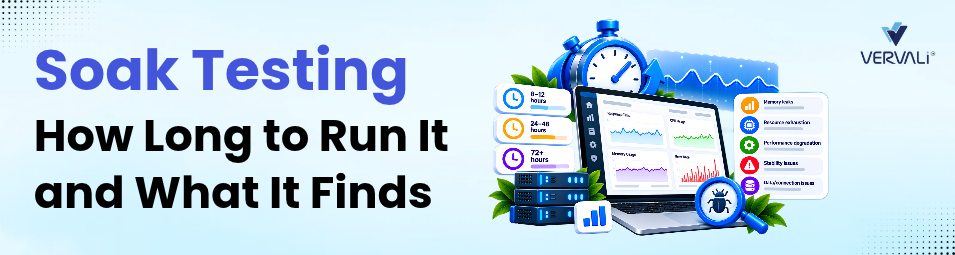
What a soak test is, how it differs from load, stress and spike tests, how long to run it, the metrics that decide a pass, and how JMeter, k6 and Gatling hold a load…
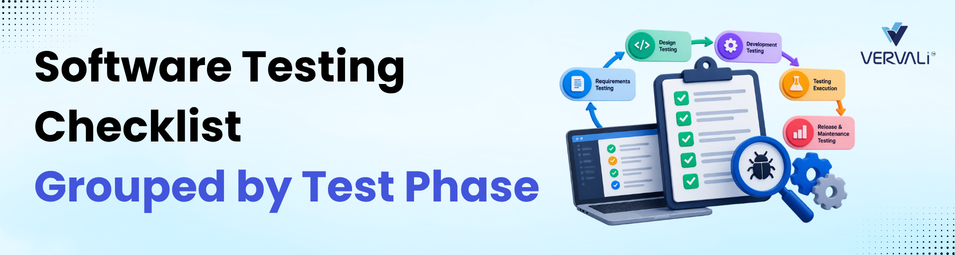
This software testing checklist groups every item by the phase of the test process it belongs to, marks the items teams routinely skip, and shows how to wire the lis…
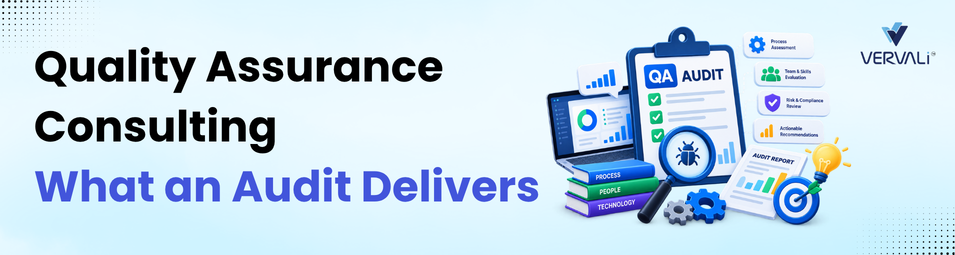
This guide explains what a QA maturity assessment scores you against, what the deliverable looks like on the last day, and when advisory work is the wrong purchase.
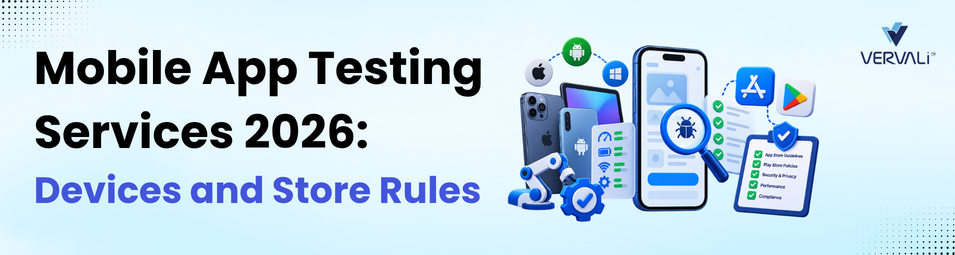
This guide explains what mobile app testing services cover, how to size a device matrix from United States traffic data, and what Apple and Google check before a rel…

Our Expertise


Trusted by 150+ Leading Brands

A Strong Team of 275+ QA and Dev Professionals

Worked across 450+ Successful Projects
 Email Us
 Call Us
From flawless code to flawless quality - we design, develop, and test digital solutions that deliver real results.